Dear Members of the Robert Burns Society of Charleston,
The purpose of this newsletter is to bring you up to date on our second third of the year activities in our Gaelic Performing Arts Program.
As you may be aware, we sponsor 21 performing arts competitions around the world, including Scotland, New Zealand, Australia, Canada, and the United States. Thanks to the generous support of the Clan Donald Trust for the Gaelic Performing Arts Programme, Burns Society members, and other supporters, we are ablespend some $150,0000 a year in delivering our performing arts program.
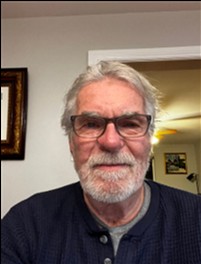
The Burns Society of Charleston congratulates Mr Jay Hackney for winning the 2026 Sister Margaret A. MacDonell Memorial Prize in Gaelic Poetry. Born in Montreal and now living in Nova Scotia, Mr Hackney is a student of the Scottish Gaelic language, and of Celtic culture and tradition. He studies regularly with the Gaelic College (Cape Breton, Nova Scotia) both immersion studies and online, as well as participating in local conversation circles.
He is also a competitive solo piper and a piper in the Dartmouth & District Grade 4 band which allows him to deepen his connection to the Celtic world through music.
If you care to read Mr Hackney’s poem and translation, please visit the Burns Society website at https://burnscharleston.com/news/
On June 5 and 6, as part of the Piccolo Spoleto Festival, we held our 6th annual Scottish Performing Arts Classic. This is a major competition involving the Great Highland Bagpipes, the Clarsach (Scottish harp), and the Scottish fiddle. We invited twelve internationally acknowledge musicians from as far away as New Zealand, and as near as Boone, North Carolina. All competitions were held at the South Carolina Society Hall, an outstanding venue. We are very grateful to the Society for their significant support.
The Angus McDonald Prize for Ceol Beag or “the little music” which is a term for all music performed on the Great Highland Bagpipes that is not piobaireachd, also known as “Ceòl Mòr,” or “the big music.”
Four renowned competitors for both prizes include prominent prize recitalist Angus J MacColl of Oban, Scotland who is considered one of the premier recitalists in Scotland; major prize winning soloist Bruce Gandy, a Canadian bagpipe player and composer and former World Pipe Band Champion with the 78th Fraser Highlanders; professional bagpiper Derek Midgley, a full-time piping instructor based in Monmouth County, New Jersey who works to improve the piping community all along the east coast; and gold medalist Greg Wilson of New Zealand, who began piping at the age of nine and has had considerable success on the solo competition boards in New Zealand, Australia, Canada, and Scotland, earning dozens of major prizes and over 30 New Zealand championship titles.
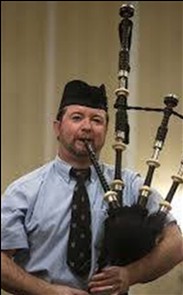
The winner of the Angus Katie McDonald prize is Bruce Gandy. Bruce Gandy is a Canadian bagpipe player and composer. He is an internationally respected bagpiper, teacher, composer, and adjudicator whose career uniquely bridges championship success with a lifelong dedication to developing thoughtful, confident musicians. A former World Pipe Band Champion with the 78th Fraser Highlanders, Mr Gandy has also achieved one of the most distinguished solo records in modern piping. His major prizes include the Silver Star for Former Winners MSR at Inverness, the Senior Piobaireachd at Oban, the Bratach Gorm in London (twice), and the Masters MSR in Glasgow. He belongs to a very small group of pipers to have won major prizes across five different decades, with a competitive record in North America that remains nearly unmatched.
The second piping competition also held on June 5th, was The Joseph MacDonald Memorial Prize for Piobaireachd . You might ask “What is Piobaireachd? “The word “piobaireachd” literally means bagpipe playing or bagpipe music, but is used to describe the classical music of the Great Highland Bagpipes. Another name for it is “Ceòl Mòr” meaning “the big music.” This term serves as a distinction from “Ceòl Beag” or “the little music”). To describe piobaireachd is no easy task. A typical piobaireachd is composed of a theme (also known as the “ground” or “urlar”) and several variations (ranging in number and complexity). The theme is typically played slowly with subsequent variations picking up in intensity, though still generally retaining a somewhat poetic and drawn-out expression, especially compared to dance music.
Nothing resembling piobaireachd is known to exist in almost any other culture or country around the world. The Great Highland Bagpipe is also the only instrument that can satisfactorily reproduce piobaireachd music. Each competitor was required to submit six tunes to the judge in advance of the competition. From that list, the judge selected one tune for each competitor to perform.
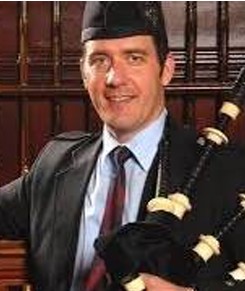
The winner of the Joseph MacDonald Prize as Greg Wilson from New Zealand. Mr Wilson’s tune submissions were:
● Lament for the Children
● The Phantom Piper of Corrieyairack
● Craigellachie
● Lady Margaret MacDonald’s Salute
● MacLeod of Colbeck’s Lament
● Scarce of Fishing
The tune selected for Mr Wilson to play was MacLeod of Colbeck’s Lament.
Both June 5th and 6th bagpipe competitions were judged by Bob Worall, who has been selected to judge the World Pipe Band Championships in Glasgow on 14 occasions. For the last 12 years, he has been the colour commentator for the BBC’s broadcast of the World Pipe Band Championships. He is a member of the Piobaireachd Society’s Senior Judges list and has adjudicated major competitions throughout the United Kingdom, New Zealand, Australia, Brittany and South Africa.
The second competition was the Princess Margaret of the Isles Memorial Prize for Clarsach (Scottish harp). The clàrsach is Scotland’s oldest national instrument, played across the land since ancient times. Long before the bagpipe, it was central to Gaelic courtly music. The earliest depictions appear on Pictish stones from the 8th century. It existed in two forms: the earlier Pictish harp, strung with gut or horsehair, and the Gaelic clàrsach, strung with wire. The clarsach remained the primary instrument of Gaelic courts until the bagpipe’s introduction in the 15th century and maintained some significance into the mid-18th century. It was also significant in the early Celtic church.
Four outstanding musicians from around the United States competed for three prizes. The Grand Prize, the Best Adaptation of a Joseph MacDonald tune, and Best New Competition. The competitors were Grace English from Huntsville, Alabama, James Ruff from Poughkeepsie, NY, Riko Komura from Boston, MA (originally Osaka, Japan), and Chad MacAnally, Minneapolis, MN.
The winner of the Best Joseph MacDonald adaptation was Grace English. The Best New Composition was Riko Komura. And the winner of the Grand Prize was Chad MacAnally.

Chad MacAnally has performed professionally for over 20 years throughout the US, Canada and Ireland. Youthful interest in classical and traditional music led him to take up the wire strung harp in 1985, having his first lesson with renowned harper and storyteller, Patrick Ball. Having no harp to continue with, he built his first wire strung harp in his parent’s basement workshop at the age of 16. Self-taught on the harp for years, eventually he sought out Ann Heymann, who continues to lead the revival of the historical Gaelic harp. In 2009, Mr MacAnally won the prestigious National Scottish Harp Championship, sponsored by the Scottish Harp Society of America. He is only the second wire-strung harper to win the title in the history of the competition.

The Judge for the Clarsach was Ann Heymann from Winthrop, MN. A master in the performance and traditions of the Gaelic harp, Ann Heymann continues to spearhead the instrument’s revival. Known for her symbiotic relationship with her instrument and her ability to wed performance practice with the recorded literary tradition, Mrs Heymann has a number of accomplishments to her name. She authored the first tutor for the instrument, based upon the first tunes taught student harpers in the old tradition (Secrets of the Gaelic Harp and A Gaelic Harper’s First Tunes). Under the name “Clairseach” (Irish for “Gaelic harp”), Ann and her husband Charlie perform a broad spectrum of repertoire–from traditional and historical to Mrs Heymann own compositions–throughout the United States, Europe and Australia.
The Dan R MacDonald Memorial Prize for Best Senior Fiddle (North America) is named after Dan Rory MacDonald of Inverness County on Cape Breton Island. He became one of Cape Breton’s most prolific composers of fiddle tunes. Usually known as ‘Dan R.’, MacDonald took an early interest in music, encouraged by his fiddle-playing father. He made his first radio appearance in 1935, and the next year he composed his first tune – a reel called The Red Shoes. Although Dan R. had a reputation as an outstanding fiddler, people remember him best for his composing. He estimated in the early 1970s that he had written over two thousand tunes. Many of his compositions have become part of the ‘standard’ Cape Breton repertoire. Two published volumes of Dan R.’s compositions exist: The Heather Hill Collection and The Trip to Windsor Collection.
The Society’s final event is the Dan R. MacDonald Memorial Prize. Four outstanding, nationally recognized fiddlers including Louise Bichan, Shane Watson, David Gardner, and Paula Johannesen competed for the coveted Dan R. MacDonald Prize, the Best Adaptation of a Red Rob Mackintosh tune, and the Best Original Composition.
The winner of the Best original composition was David Gardner, and the winner of the Best Robert Mackintosh adaptation was Louise Bichan

The winner of the Grand Prize, the Dan R MacDonald Memorial, was Louise Bichan. Ms Bichan is a USA-based Scottish musician and photographer who uses both mediums to tell stories old and new. Growing up in the remote but culturally rich Orkney Islands of Scotland gave Ms Bichan a solid grounding in music. She started playing fiddle at the age of seven after witnessing the magic of live music. In the years since, she has honed her craft, first in Glasgow’s renowned session scene, and later a scholarship to Berklee College of Music in Boston. Masterfully blending traditional and classical arrangements, she composes in response to her roots and the world around her, weaving through stories of connection, to people, nature, the past, and the possibility of the future.

The Judge for the Scottish Fiddle was Dr Mari Black. Called “one of the brightest fiddlers around today”, multi-style violinist and champion fiddler Dr Black delights audiences around the world with her energetic playing, sparkling stage presence, and dazzlingly virtuosic fiddling. Raised on a rich blend of traditional musical styles, Dr Black burst onto the international stage when she became Scotland’s Glenfiddich Fiddle Champion, two-time U.S. National Scottish Fiddle Champion, and two-time Canadian Maritime Fiddle Champion, all within a three-year period. Ever since, she has been spreading her love for dance-based music, performing as a featured artist at performing arts centers, Celtic festivals, Scottish Highland Games, celebrated folk venues, world music concert series, and acclaimed classical venues including Carnegie Hall. Dr Black’s passion for dance-driven music extends far beyond the concert stage, as reflected in her work as a teacher, composer, dancer, competition judge, and musical ambassador committed to connecting people through music. Having earned her Doctorate in Education from Columbia University and a Masters in Performance from the Yale School of Music, Dr Black is a master teacher who is dedicated to helping students of all ages and levels explore the joy of making music.
The Scottish performing arts world and we will have much to report in our next newsletter. We look forward to sharing the result of these competitions with you.
All the performances from the Scottish Classic have been recorded, and you may see them by visiting our website.
The Robert Burns Society of Charleston Inc. is recognized as a 501(c)(3) non-profit organization committed to celebrating and sustaining Scottish-American heritage in the South Carolina Lowcountry. This commitment includes the promotion of historical awareness, cultural expression, and military traditions associated with Scotland. The Society fulfills its mission by hosting educational and cultural activities, supporting the mastery of traditional Scottish arts—such as Highland Bagpiping, Highland Dance, Scottish Fiddle, Scottish Harp (Clàrsach), and the Scots Gaelic language—and by providing grants and scholarships that support academic advancement within the Scottish-American community.
Become a Member